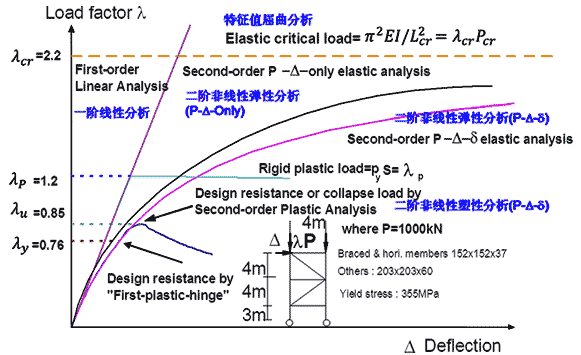
Three Core Modules
Pre-processing Modeling · Solving Computation · Post-processing Visualization
Intuitive Modeling Interface
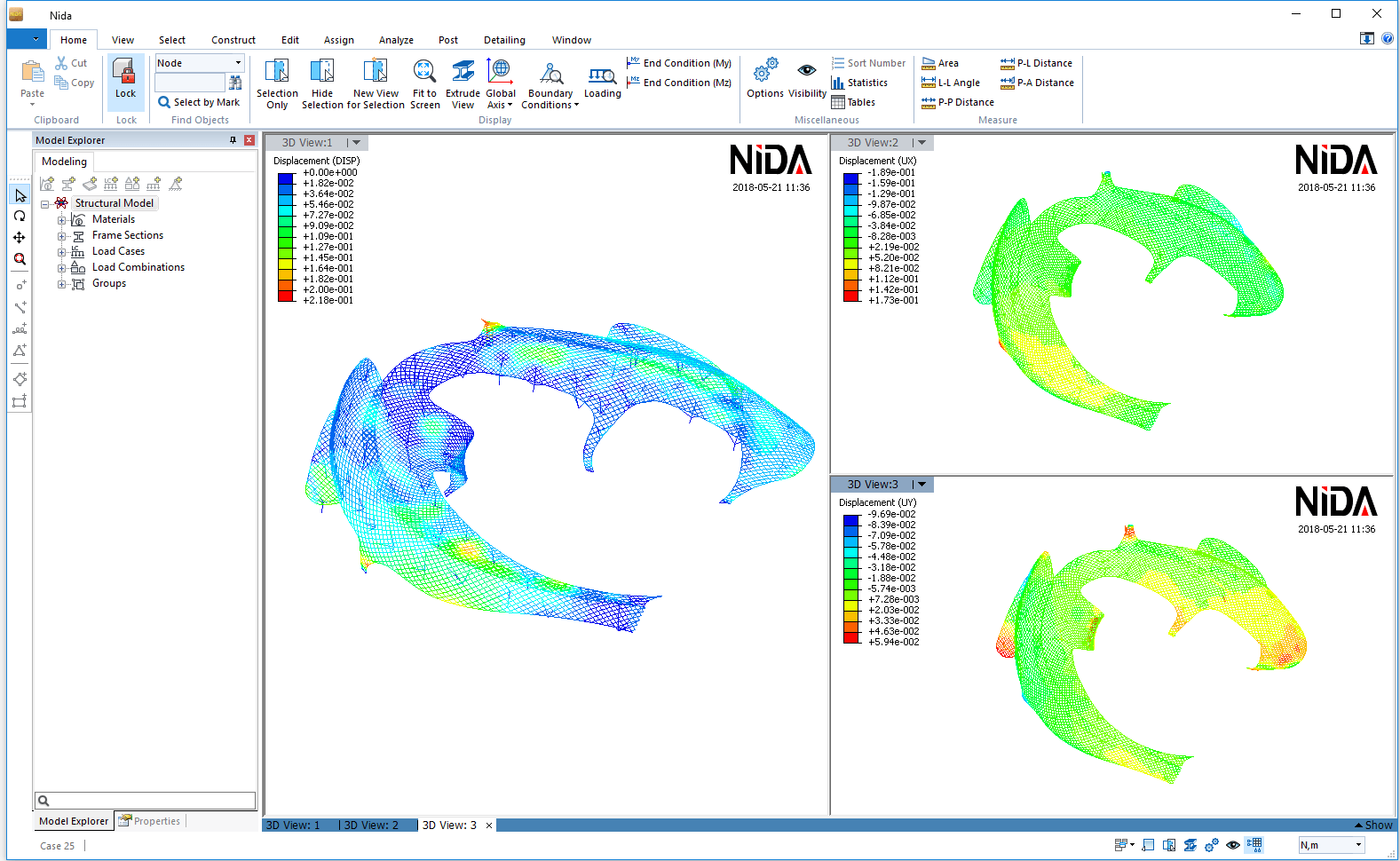
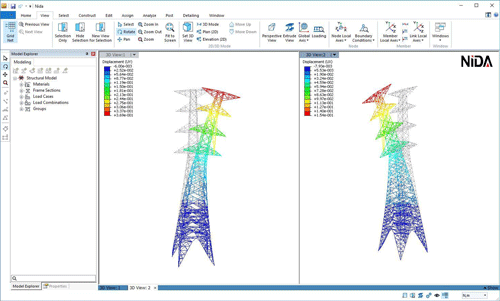
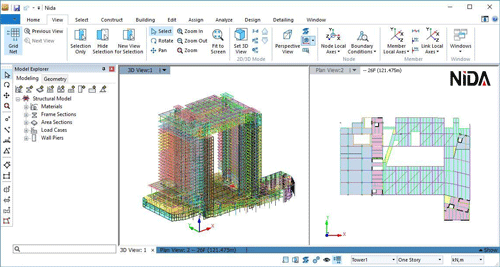
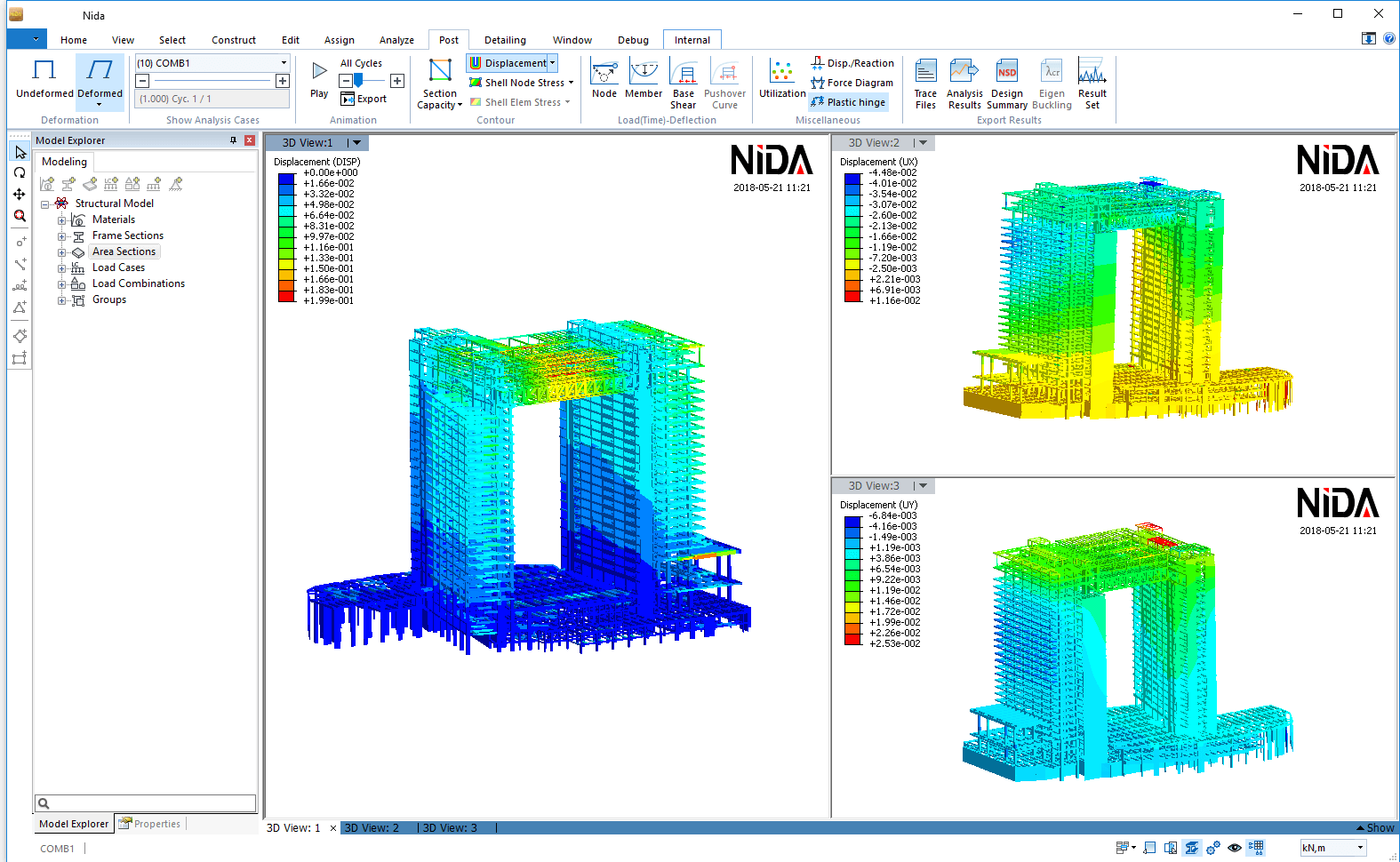
NIDA provides a graphical pre-processing environment, supporting interactive definition of nodes, members, boundaries and loads. Users can quickly build complex structural models and efficiently manage member properties and sections through parametric methods.
Supports import and export of multiple data formats, facilitating coordination with mainstream design software and improving modeling efficiency.
Powerful Modeling Capabilities
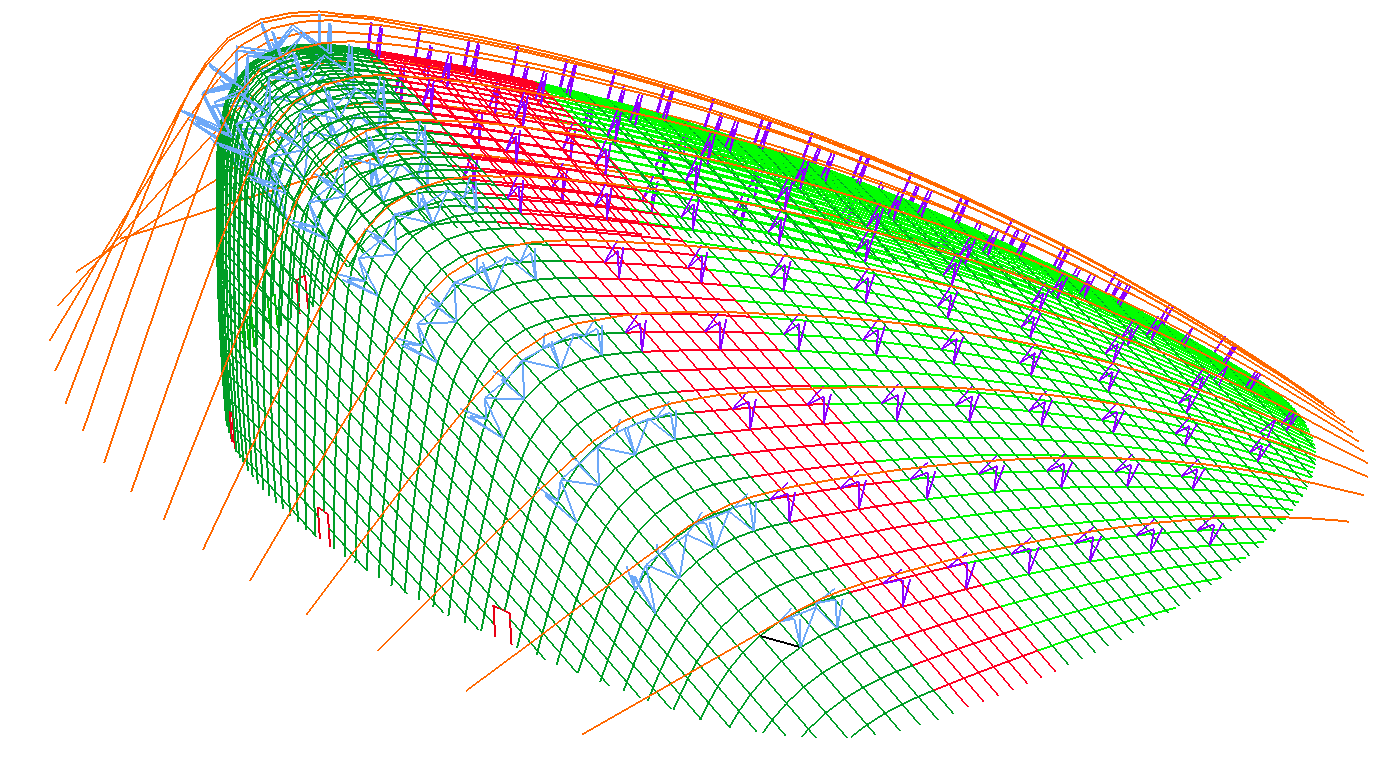
Supports multiple element types such as beams, columns, plates and shells, and can simulate semi-rigid connections, plastic hinge springs and nonlinear boundary conditions. Practical factors such as member initial imperfections and residual stresses can all be incorporated into the model.
Flexible load case combinations and construction stage definitions truly reflect the stress state of the structure at different stages.
Rich Post-Processing
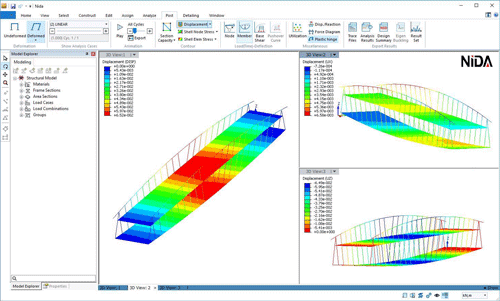
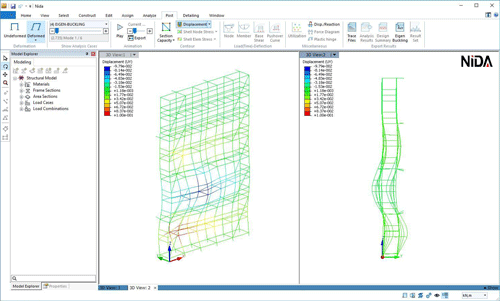
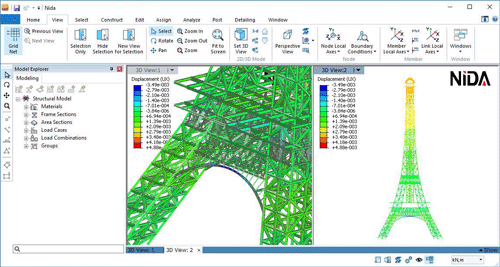
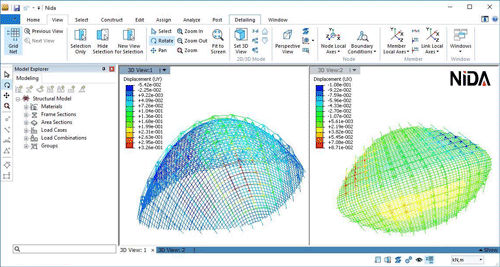
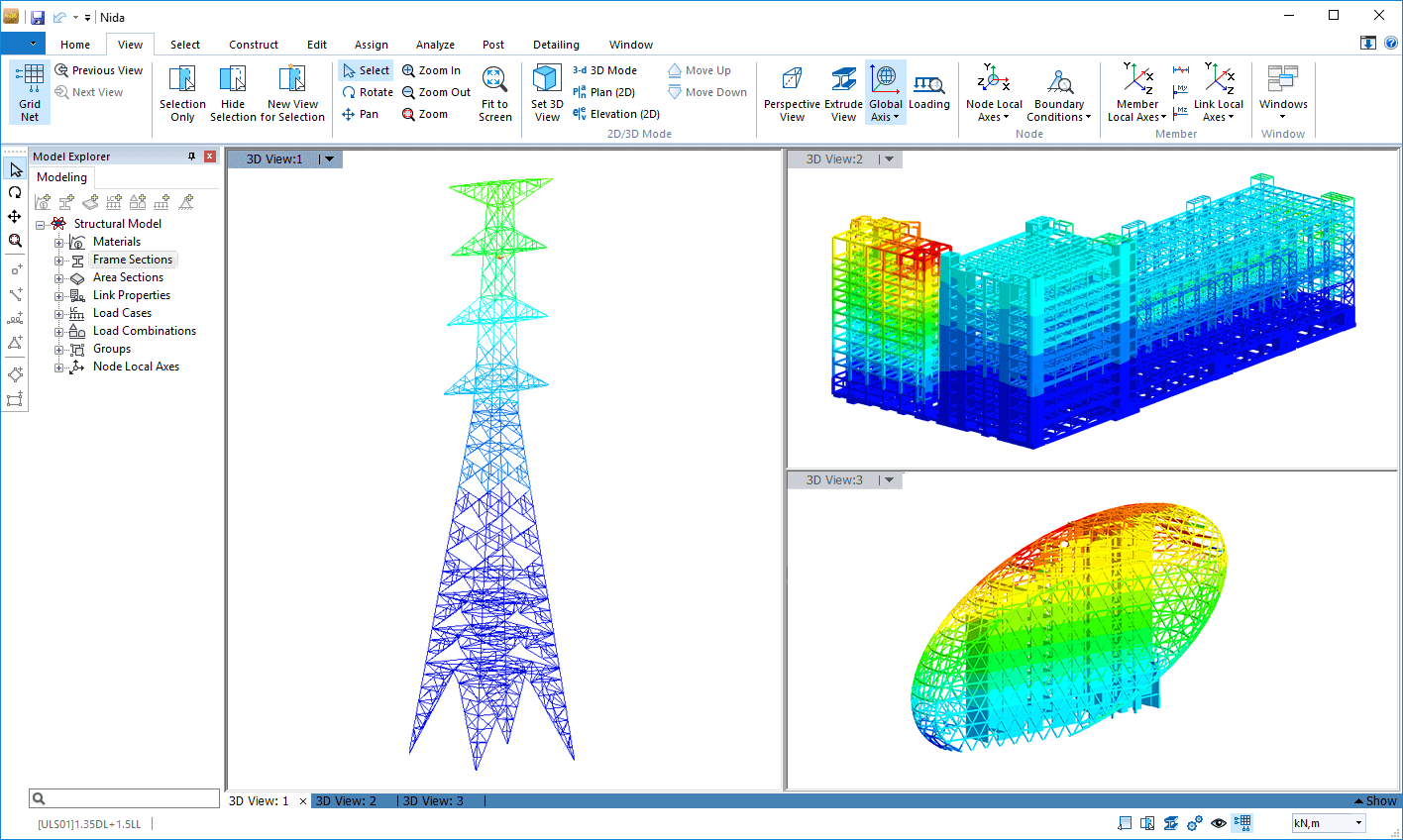
Graphical display of deformation, internal forces, stress distribution and plastic hinge development process, supporting load-displacement curve plotting and analysis process animation playback, intuitively presenting structural behavior.
One-click generation of analysis reports, facilitating engineering design delivery and result archiving.