How to Consider Column Stability in Traditional Design?
To account for column stability, current design methods are primarily based on linear elastic analysis, and there are generally two treatment approaches, as follows:
- Effective Length Method: considers second-order effects mainly by reducing the load-carrying capacity of columns
- Moment Amplification Method: considers second-order effects mainly by amplifying the first-order linear moments
Introduction to the Effective Length Method
This is a design method with a long history. Since 1961, it has appeared in the AISC specification and has subsequently been incorporated into the design codes of various countries and regions; to this day, it is still widely used.
Characteristics of the method:
- The theory is based on the Euler buckling theory
- It requires assuming an effective length for all members
- It considers second-order effects by reducing the load-carrying capacity of columns
- It assumes that all columns in the structural system buckle simultaneously
- When the section properties of connected members change, the effective length must be recalculated
In general codes, when applying the effective length method, frame classification is required, and tables similar to the one below are used to calculate the restraint conditions at both ends of a member:
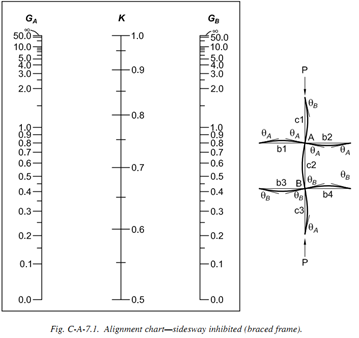
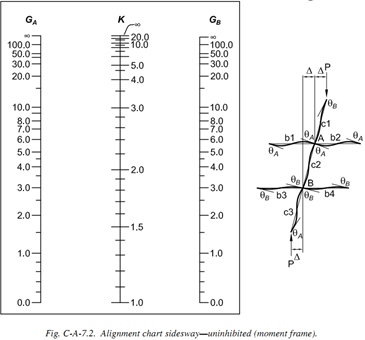
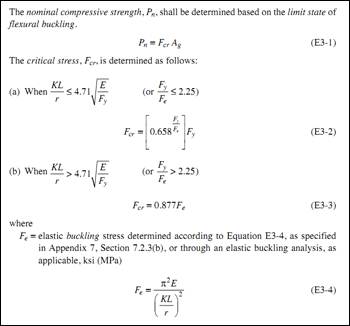
After determining the K factor of the column, the design strength is reduced accordingly to account for the influence of second-order effects.
Introduction to the Moment Amplification Method
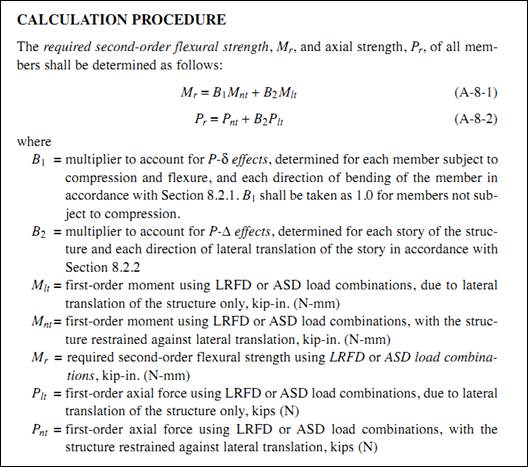
This method considers second-order effects by amplifying the first-order linear moments.
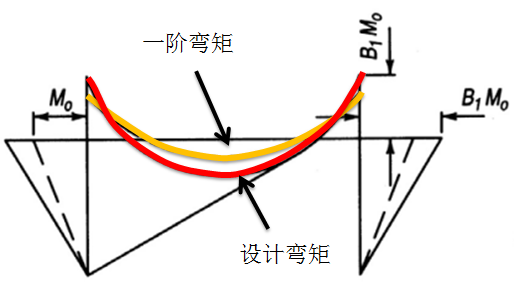
In the American AISC-2010 specification, the B1 and B2 factors are calculated to amplify the first-order moments, thereby accounting for the influence of second-order effects.